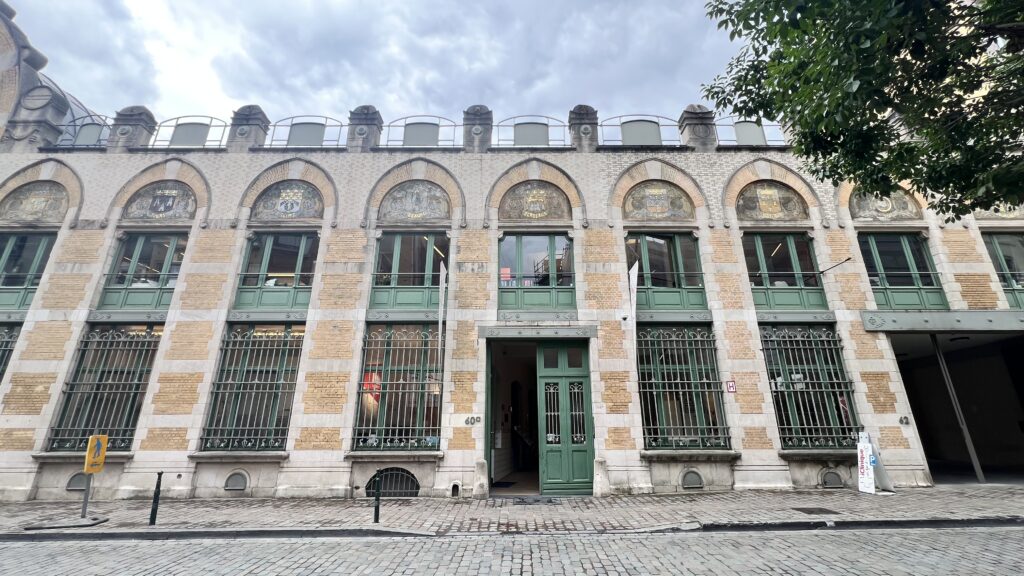
Project Spotlight: EMERALD – Zero Carbon Office Building
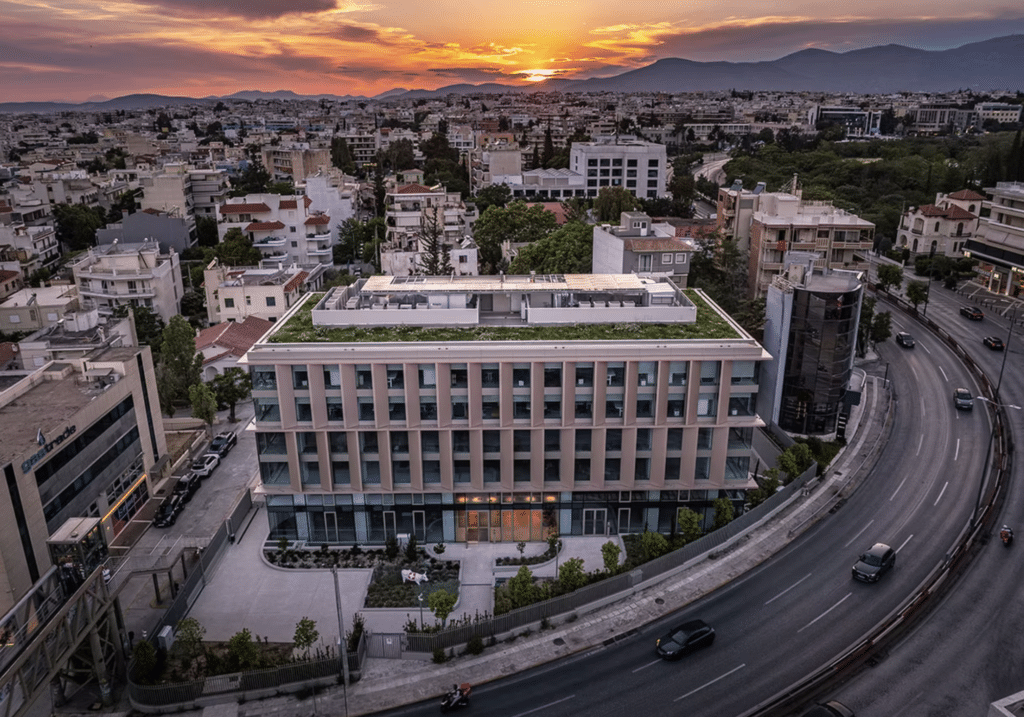
In June, the EMERALD project celebrated putting its very last roof tile into place and now the new Advanzia Bank offices in Luxembourg are on-track to become the first office project to be certified with the International Future Living Institute (ILFI) Zero Carbon certification in BeNeLux (Belgium, The Netherlands and Luxembourg). The Emerald Building has been built using certified wood and pollutant-free materials. It features a highly efficient heating, cooling and ventilation system, photovoltaic installations, rainwater collection, green roofing, sun protection and light control to minimise the building’s carbon footprint.
The ILFI Zero Carbon Certification is the first worldwide Zero Carbon third-party certified standard. One hundred percent of the operational energy use associated with the project must be offset by new on- or off-site renewable energy. One hundred percent of the embodied carbon emissions impacts associated with the construction and materials of the project must be disclosed and offset. Among other requirements, projects must demonstrate actual net zero carbon operations based on a twelve-month performance period, during which time the project must be occupied consistently with its stated use.
In the first of a two part series, Living Future Europe’s Jacquie Pierri chatted with Fabian Theis, founding partner of ANDANDO Real Estate Group, to learn more about the project:
Jacquie: What made you and the team decide to pursue a Zero Carbon certification for this project?
Fabian: One of the primary reasons to pursue the Zero Carbon certification is to reduce the environmental impact of the EMERALD building. By achieving a substantially low net energy consumption, the building contributes less to greenhouse gas emissions and climate change. It helps in conserving natural resources and promotes sustainable development.
Furthermore, the Zero Carbon certification enhances the marketability of the project. As we are the first to build such an office property in the BeNeLux area, it is a unique selling point that attracts environmentally conscious buyers. Especially against the background of substantial ESG fulfilment needs in today’s investment market.
Pursuing the Zero Carbon certification helps us in showing commitment to environmental sustainability and leadership in the real estate industry. It enhances our reputation and helps us to gain visibility in the Luxembourgish real estate market.
Jacquie: What do you think are the most valuable elements of pursuing the ZC certification?
Fabian: One of the most important reasons in our view is occupant comfort. The wood-hybrid construction method contributes to a superior indoor air quality, thermal comfort, and noise reduction due to its energy-efficient design, consequently leading to improved occupant comfort and productivity.
Another important reason is cost savings. While implementing energy-efficient technologies and designs involve upfront costs, the long-term savings can be significant. Zero Carbon buildings typically have lower utility bills. Over time, this will result in substantial cost savings for both property owners and tenants.
Finally, it’s beneficial for us to be at the leading edge of regulatory compliance. As governments and municipalities introduce stricter building codes and regulations related to energy efficiency and emissions, Zero Carbon certification helps ensure compliance with these evolving standards.
Jacquie: How has the experience been so far and leading up to construction? Have there been any moments of caution or things that have required more attention than expected?
Fabian: The cooperation during the construction project was goal orientated. Our contact person was approachable and constructive.
Challenges arose from the implementation of the certification criteria to our specific EMERALD project. Due to the fact that there is only limited space on the project site for example, we had to find a creative, yet practical and eligible way to allocate the new renewable energy to the project. After discussions and consultations, a pragmatic, sustainable solution was found.
Jacquie: How has the rest of the design team responded to the ZC aspiration?
Fabian: The planning team considers the Zero Carbon certificate as a good extension in general and also perceived the certificate’s statement as a useful addition to the standard DGNB and BREEAM certifications.
The feedback from the user and the rest of the community was very positive and we were delighted that the topic of sustainability was given such importance. For us, zero carbon represents the path we want to and will take with the building and our company orientation.
The certification process is focused on essentials, namely to demonstrate in a third party-certified manner that we want to reduce CO2 emissions and the impact of the construction industry on the environment.
Click here to learn more about the project. Stay tuned for the second half of this conversation.
If you are interested in LFE advisory services for your project, please contact us at info@living-future.eu